FMCG Distributorship Business: A Complete Guide for Entrepreneurs in India
FMCG distributorship offers entrepreneurs an opportunity to build a business by supplying essential products to retailers, wholesalers, and local markets. With the right business planning, suitable product selection, and strong relationships with manufacturers, entrepreneurs can establish a distribution network that supports long-term business growth.
What Is an FMCG Distribution Business?
Fast-Moving Consumer Goods (FMCG) are products that people purchase frequently for everyday use. These products generally have high consumption rates, regular demand, and relatively quick inventory turnover.
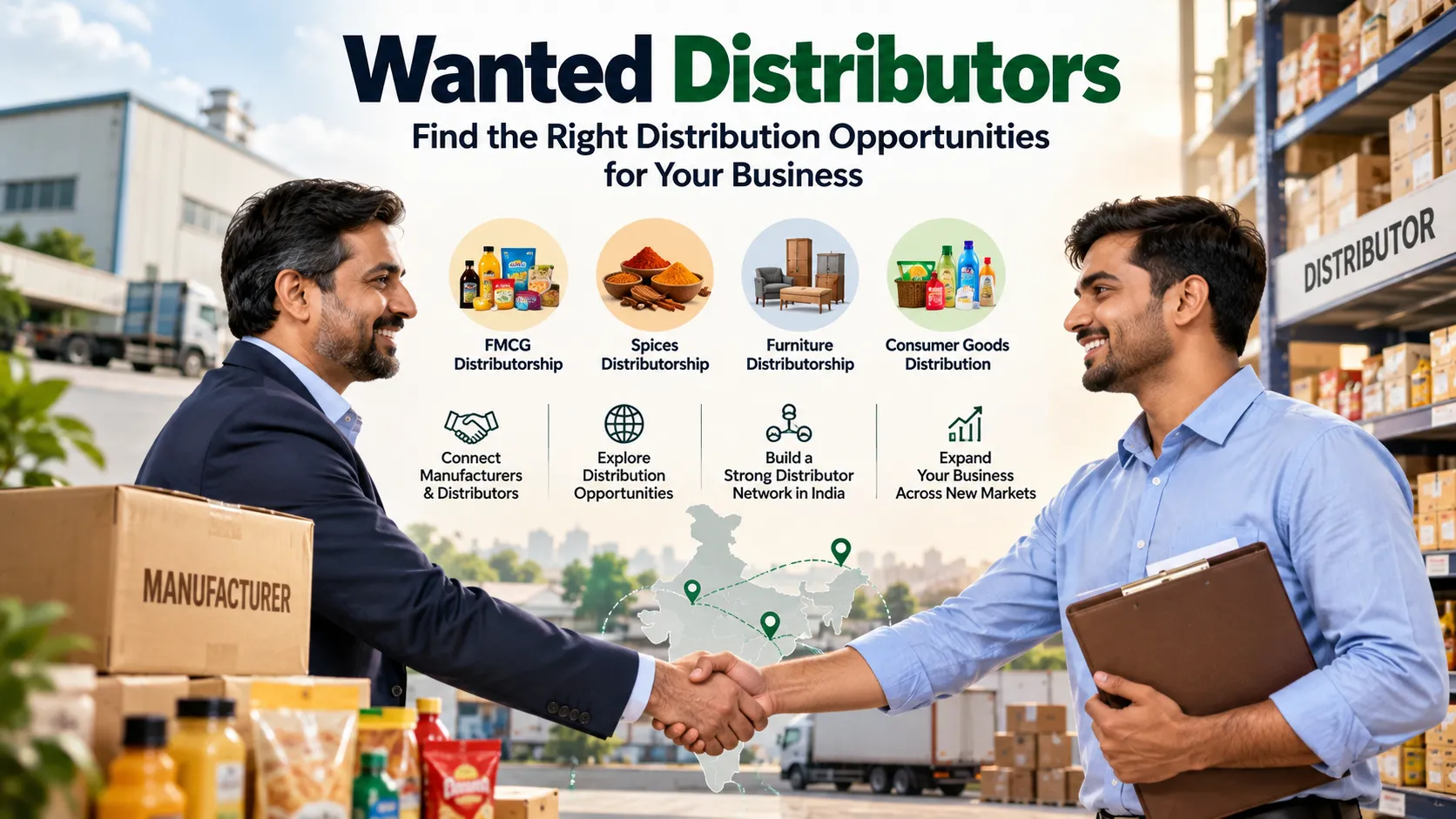
An FMCG distributor acts as an intermediary between manufacturers and retailers. The distributor purchases products from a company or its authorized supply channel and supplies them to grocery shops, supermarkets, wholesalers, and other retail outlets.
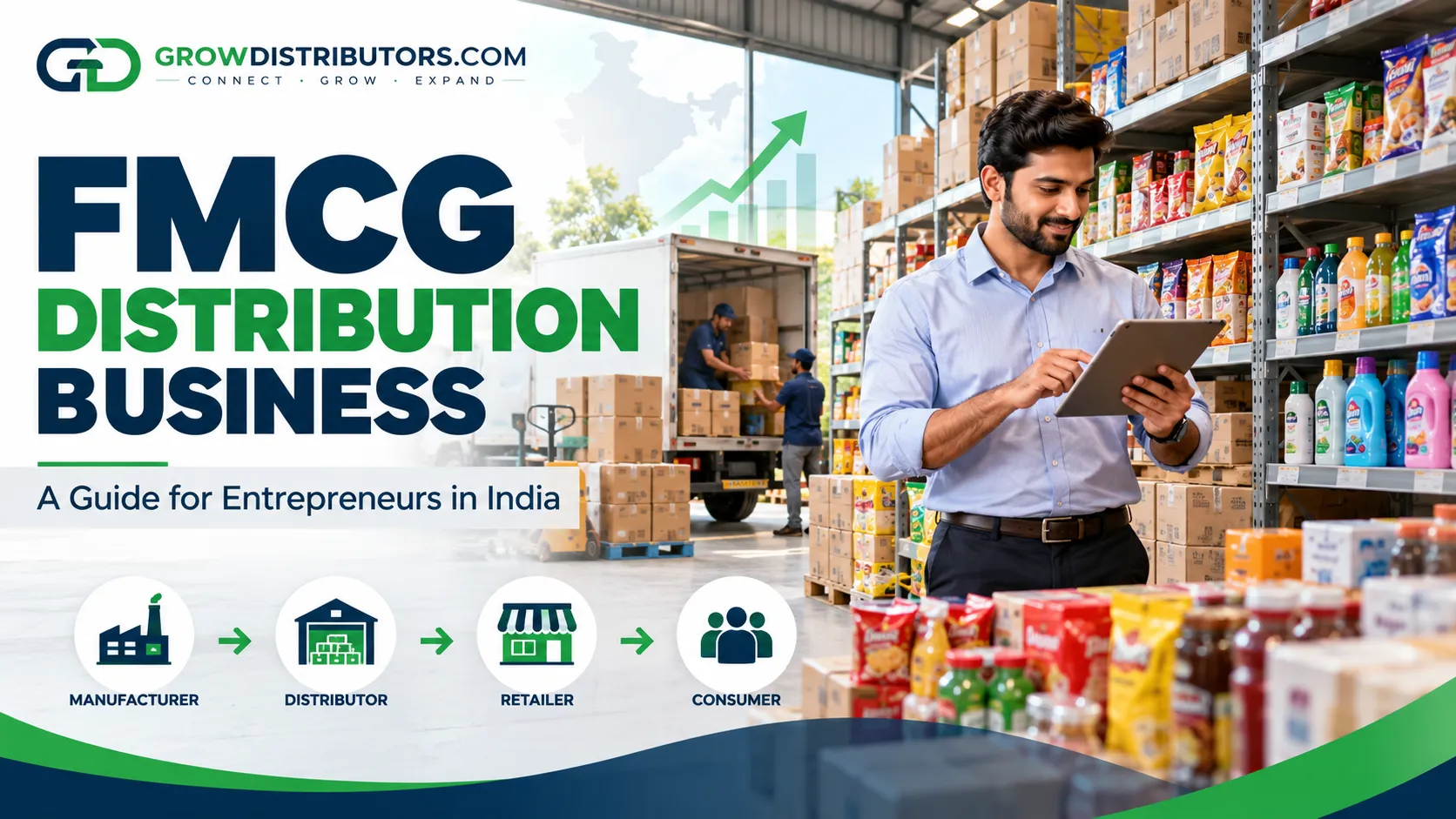
The typical distribution chain follows this structure:
Manufacturer → Super Stockist → Distributor → Retailer → Consumer
Depending on the company's business model, some distribution channels may not require a super stockist.
The business involves more than purchasing and selling goods. Successful distributors manage inventory, maintain retailer relationships, arrange transportation, collect payments, and ensure that products remain available in their assigned territories.
Why Start an FMCG Distributorship Business in India?
India's diverse consumer market creates opportunities for entrepreneurs interested in wholesale trading and distribution. From large cities to smaller towns, people regularly purchase food products, household essentials, personal care items, and beverages.
Here are some important reasons to consider this business.
1. Regular Product Demand
Everyday consumer goods are purchased repeatedly. Retailers need regular supplies to meet customer demand, creating opportunities for distributors to build recurring business relationships.
2. Opportunities in Small Cities and Rural Markets
Entrepreneurs do not necessarily need to operate in a metropolitan city. Smaller towns, developing markets, and rural areas can offer opportunities where retailers need reliable suppliers and convenient product availability.
Understanding local purchasing habits can help distributors select products that suit their target customers.
3. Multiple Product Categories
Entrepreneurs can choose from packaged food, beverages, spices, personal care products, home cleaning supplies, and other consumer essentials.
Starting with a focused product category can help control inventory and simplify market development.
4. Scope for Business Expansion
A distributor can gradually increase the number of retail outlets served, introduce additional product categories, expand into nearby territories, and hire sales representatives as the business grows.
However, growth depends on demand, competition, working capital, operating costs, and the distributor's ability to manage the business efficiently.
Types of Products Available for Distribution
Choosing the right product category is one of the most important decisions when starting a distribution business.
Some popular categories include:
- Packaged food: Biscuits, namkeen, snacks, noodles, and ready-to-eat products.
- Spices and masalas: Turmeric, chilli powder, blended spices, and packaged seasoning.
- Beverages: Packaged water, juices, tea, coffee, and other non-alcoholic drinks.
- Personal care: Soap, shampoo, toothpaste, skincare products, and hair care items.
- Home care: Detergents, dishwashing products, floor cleaners, and household cleaning supplies.
- Dairy and staples: Packaged milk products, flour, rice, pulses, and other essential food items.
Before selecting a category, evaluate local demand, competition, shelf life, storage requirements, retailer interest, and the manufacturer's commercial terms.
How to Start an FMCG Distributorship Business
Starting a distribution business requires planning, research, and financial preparation. The following steps can help entrepreneurs approach the process systematically.
Step 1: Research Your Local Market
Identify the retailers, wholesalers, supermarkets, and grocery stores operating in your target territory.
Speak with shopkeepers to understand which products sell regularly, which brands they prefer, and whether they are interested in introducing new products.
This research can help you identify gaps in the local market before investing in inventory.
Step 2: Choose Your Product Category
Select products that match local consumer preferences and your available investment.
For example, an entrepreneur serving a small town might investigate packaged snacks, spices, personal care items, or household essentials based on retailer feedback.
Avoid selecting products only because a company advertises attractive margins. Strong demand and repeat purchases are equally important.
Step 3: Estimate Your Investment
The required investment varies by company, territory, product category, minimum order quantity, and storage requirements. There is no single investment amount that applies to every distributor.
Prepare a budget covering:
- Initial inventory purchases
- Warehouse rent and storage
- Transportation and delivery
- Staff salaries, if required
- Business registration and compliance
- Retailer credit and working capital
- Unexpected operating expenses
Maintain sufficient working capital to continue supplying retailers while waiting for customer payments.
Step 4: Find Suitable Manufacturers and Brands
Identify companies that manufacture products with demand in your territory. Review their product range, reputation, pricing, distribution policy, and existing market presence.
You can approach companies through official websites, regional sales offices, trade exhibitions, referrals, and specialized B2B platforms.
GrowDistributors.com is a B2B platform designed to connect manufacturers, brands, distributors, dealers, and super stockists. Entrepreneurs can explore business opportunities, while companies can showcase their distribution requirements and connect with potential partners.
Visit https://growdistributors.com/ to explore available opportunities.
Step 5: Check the Commercial Terms
Before signing an agreement or placing an order, clarify the following details with the company:
- Initial investment and minimum order quantity
- Distributor margin and incentive structure
- Territory allocation and exclusivity
- Payment terms and credit period
- Stock replacement and expiry policies
- Marketing support and promotional schemes
- Sales targets and agreement conditions
Verify the company and its representatives before transferring money. Request written documentation and confirm the appointment through official company channels.
Step 6: Complete Business Registrations
The registrations and licenses required depend on the products you distribute and your business structure.
Depending on your operations, you may need a business registration, PAN, a current bank account, GST registration where applicable, and local trade permissions.
Food businesses may also require applicable FSSAI registration or licensing. Confirm the relevant requirements with a qualified professional or the appropriate government authority before commencing operations.
Step 7: Build Your Retailer Network
Your retailer network is central to the success of your business.
Prepare a list of potential outlets, visit shopkeepers regularly, share product catalogues, communicate pricing clearly, and maintain reliable delivery schedules.
Offer professional service and build trust through consistent product availability, transparent billing, and timely resolution of complaints.
Step 8: Monitor Inventory and Cash Flow
Track stock movement, sales, outstanding payments, damaged goods, and product expiry dates.
Prioritize fast-moving products and avoid purchasing excessive quantities of slow-selling items.
Remember that high sales do not automatically mean high profits. Cash flow, collection discipline, and operating expenses must be managed carefully.
How GrowDistributors.com Can Help You Find Business Opportunities
Finding a suitable manufacturer can be challenging, especially for entrepreneurs who are entering the distribution industry for the first time.
GrowDistributors.com aims to simplify the process by bringing businesses and distribution partners together on a dedicated B2B platform.
For aspiring distributors
Entrepreneurs can explore listed brands and business opportunities, review relevant requirements, and identify companies that may be suitable for their location and investment capacity.
For existing distributors
Established distributors can investigate additional product categories, discover new brands, and explore opportunities to expand their business network.
For manufacturers and brands
Companies looking to enter new markets can showcase their products and distribution requirements to potential partners.
This creates a common platform for businesses seeking distribution partners and entrepreneurs looking to build commercial relationships.
Explore opportunities: https://growdistributors.com/
Before choosing any listing, independently verify the manufacturer, product demand, commercial terms, and authenticity of the opportunity. Platform listings should be treated as a starting point for research rather than a guarantee of profitability.
Tips for Building a Successful Distribution Business
Long-term success depends on disciplined execution rather than simply securing a brand appointment.
- Understand local demand: Select products that retailers and customers actually want.
- Maintain competitive pricing: Compare product prices, retailer margins, and competing brands.
- Focus on stock rotation: Avoid tying up excessive capital in products that sell slowly.
- Control credit: Establish clear payment terms and follow up on outstanding invoices.
- Develop retailer relationships: Regular visits and reliable service encourage repeat orders.
- Use digital tools: Maintain sales records, inventory reports, customer lists, and payment reminders.
- Expand gradually: Enter additional territories and product categories only when your existing operations are stable.
- Verify business opportunities: Be cautious of guaranteed-profit promises and requests for unexplained advance payments.
A well-managed distribution business can create opportunities for repeat sales and market expansion, but actual results depend on business conditions and execution.
Frequently Asked Questions (FAQs)
1. What is a FMCG distributor?
An FMCG distributor is a business or individual responsible for purchasing or receiving fast-moving consumer goods from manufacturers or authorized suppliers and supplying them to retailers, wholesalers, and other sales channels.
For example, a distributor may supply biscuits, packaged snacks, personal care products, detergents, or beverages to grocery stores in an assigned territory.
Distributors typically manage inventory, order fulfilment, transportation, retailer relationships, and payment collection. Entrepreneurs looking for distribution partners can explore FMCG distribution opportunities, wholesale business opportunities, and manufacturer-distributor connections through platforms such as GrowDistributors.com.
2. How can I get FMCG distributorship?
To obtain an FMCG distributorship, first research your local market and identify product categories with consistent demand. Next, shortlist suitable manufacturers and contact their official sales teams or authorized representatives.
Prepare details about your location, investment capacity, warehouse facilities, retailer network, and distribution experience. Compare the company's minimum order quantity, distributor margin, payment terms, territory rights, and sales expectations before signing an agreement.
You can also explore FMCG distributorship opportunities, FMCG companies looking for distributors, wholesale distribution opportunities, and new product distribution requirements on GrowDistributors.com.
Visit https://growdistributors.com/ to discover potential business connections.
3. How to join a FMCG company?
To join an FMCG company as a distributor or business partner, visit the company's official website and look for its business enquiry, distributor application, or contact section. You can also approach its regional sales office, area sales manager, or authorized channel partner.
Prepare your business profile, location details, available investment, storage arrangements, and existing retailer connections. Ask about the appointment process, required documents, commercial terms, and availability of distribution rights in your area.
You can also use FMCG distributor registration, distributorship application opportunities, manufacturer partnerships, and B2B distribution platforms to discover companies seeking distribution partners. GrowDistributors.com is one option for exploring connections between brands and potential distributors.
Always verify the company's identity and confirm the appointment through official channels.
4. What are 5 FMCG products?
Five common examples of FMCG products are:
- Biscuits: Packaged snacks purchased regularly by consumers.
- Toothpaste: A personal care essential used for daily oral hygiene.
- Detergent: A household cleaning product used for washing clothes.
- Packaged beverages: Products such as bottled water and packaged juices.
- Spices and masalas: Everyday cooking products sold through grocery stores and supermarkets.
These categories can offer potential FMCG wholesale distribution, grocery product distribution, personal care distributorship, home care distribution, and food product distributorship opportunities.
However, the suitability of each category depends on local demand, competition, storage requirements, product shelf life, and the manufacturer's commercial terms.
Conclusion
An FMCG distribution business can be an attractive option for entrepreneurs who understand their local market, maintain strong retailer relationships, and manage inventory and cash flow responsibly.
The key is to select products with genuine demand, evaluate manufacturers carefully, and build a reliable supply network instead of investing based only on attractive profit claims.
Whether you are starting your first distribution venture or expanding an existing business, GrowDistributors.com can be a useful starting point for discovering brands, manufacturers, and potential distribution partners.