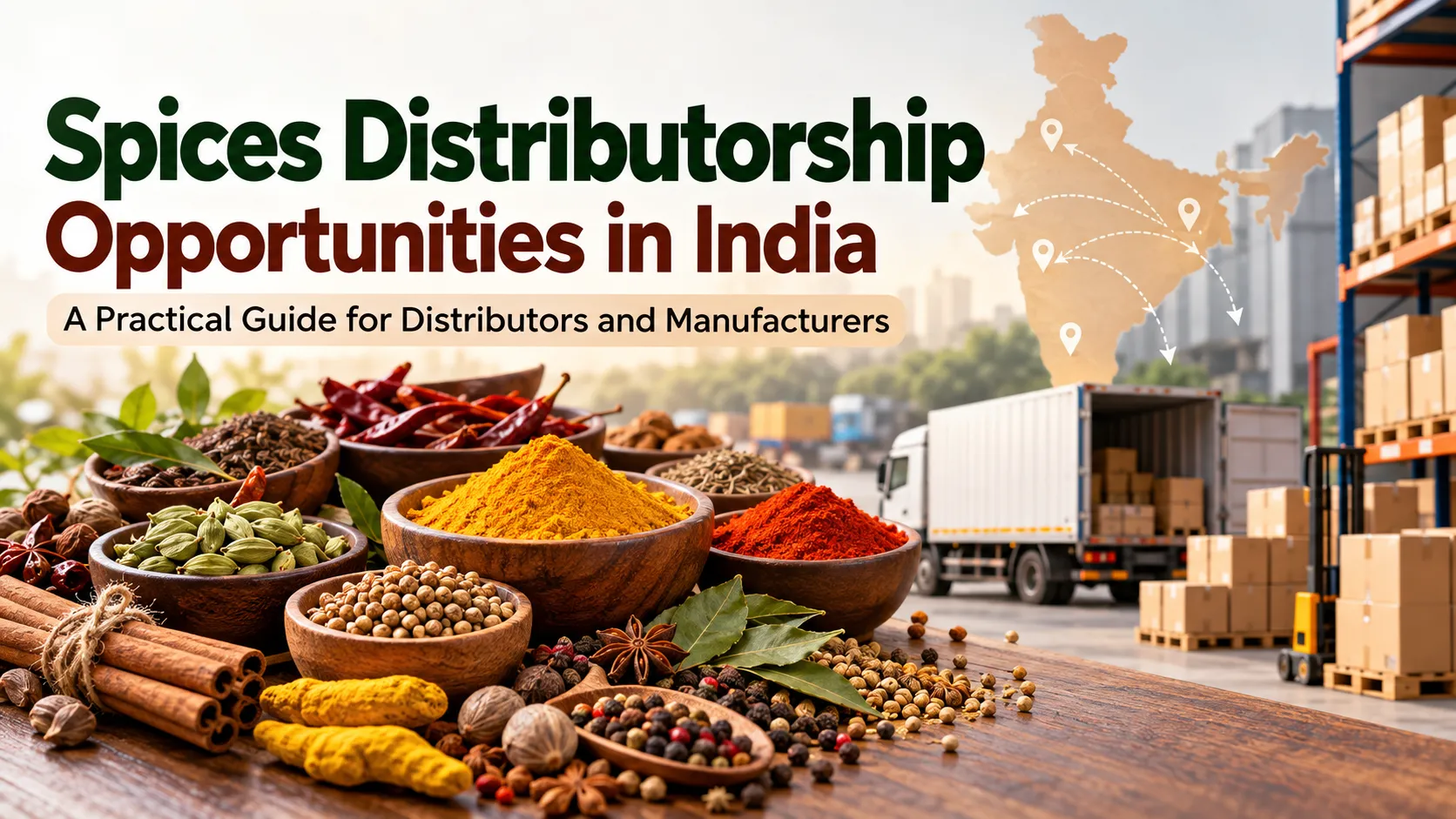
Distributorship Opportunities in India: A Complete Guide to Finding the Right Business Opportunity
Distributorship opportunities are becoming an attractive option for entrepreneurs, retailers, wholesalers, and aspiring business owners who want to build a distribution business in India. From FMCG products and packaged foods to furniture, agriculture, personal care, and building materials, distributorship opportunities allow businesses to connect manufacturers with retailers and customers through an organized supply chain. With the right product, market research, and distribution strategy, entrepreneurs can explore business opportunities that match their budget, location, and long-term goals.
What Are Distributorship Opportunities?
Distributorship opportunities refer to business arrangements in which a manufacturer or brand appoints an individual or company to distribute its products within a specific territory or market. Depending on the agreement, a distributor may supply retailers, wholesalers, dealers, or other business customers. These distributorship opportunities can include exclusive or non-exclusive arrangements, depending on the brand's distribution policy. Before choosing a distributorship, it is important to understand the investment requirements, profit margins, minimum order quantities, territory rights, and sales expectations.
Why Are Distributorship Opportunities Worth Exploring in India?
Distributorship opportunities can help entrepreneurs participate in established product markets without necessarily manufacturing products themselves. India's diverse consumer markets create demand for products across food and beverages, household essentials, personal care, agriculture, construction, and furniture. However, the potential of any distributorship depends on local demand, competition, supply reliability, working capital, and the distributor's ability to develop strong retailer relationships. A carefully researched distribution business can provide a practical route to building long-term commercial relationships and expanding into new markets.
Best Distributorship Opportunities to Explore in 2026
Entrepreneurs searching for distributorship opportunities should compare multiple industries instead of selecting a product only because it is popular. The following categories offer different business models, customer groups, investment requirements, and operational challenges. Actual investment and margins vary by brand, territory, order size, and contractual terms.
1. FMCG Distributorship Opportunities
FMCG distributorship opportunities are relevant for entrepreneurs interested in fast-moving consumer goods such as packaged foods, spices, snacks, beverages, cleaning products, personal care items, and everyday household essentials. An FMCG distributor typically supplies products to retailers, supermarkets, wholesalers, and local shops. These distributorship opportunities may benefit from repeat-purchase demand, but success depends on product availability, competitive pricing, retailer coverage, expiry management, delivery costs, and working capital.
Anyone planning to become an FMCG distributor should evaluate the brand's existing market presence, product demand, distributor margins, minimum order requirements, credit policy, and promotional support. A new FMCG brand may offer opportunities to enter an underserved market, but entrepreneurs should verify the company's credibility and calculate realistic operating expenses before making an investment.
2. Furniture Distributorship Opportunities
Furniture distributorship opportunities can appeal to entrepreneurs who have access to retailers, furniture showrooms, contractors, institutional buyers, or local dealers. Products may include plastic furniture, office furniture, home furniture, school furniture, modular furniture, and commercial seating. These distributorship opportunities can involve higher individual order values than many small consumer products, although storage, transportation, handling, product damage, and inventory costs must be considered.
Before starting a furniture distributorship, assess local construction activity, housing demand, retail competition, product quality, delivery arrangements, and the manufacturer's after-sales support. Entrepreneurs should also determine whether the business will operate through a showroom, a dealer network, direct institutional sales, or a combination of these channels.
3. Food and Beverage Distributorship Opportunities
Distributorship opportunities in the food and beverage industry include packaged snacks, spices, tea, coffee, biscuits, dry fruits, ready-to-eat products, sauces, and other packaged foods. These products may serve grocery stores, supermarkets, restaurants, hotels, and institutional buyers. Businesses entering this segment should evaluate demand frequency, shelf life, storage requirements, product licensing, packaging quality, and supply consistency.
A food-product distributor should also verify applicable food-safety and business compliance requirements. For entrepreneurs exploring food and beverage distributorship opportunities, products with clear customer demand and dependable replenishment arrangements may be more practical than products selected solely on the basis of advertised margins.
4. Agriculture and Farming Distributorship Opportunities
Agriculture distributorship opportunities can serve farmers, agricultural retailers, dealers, and rural markets. Potential product categories include agricultural equipment, irrigation accessories, farming tools, soil-improvement products, fertilizers, and other agricultural inputs. Demand may vary according to local crops, farming practices, seasonal cycles, and regional agricultural conditions.
Entrepreneurs considering agriculture-related distributorship opportunities should check product authorizations, applicable licenses, storage conditions, manufacturer credentials, and local demand before investing. Building relationships with agricultural retailers and understanding the requirements of farmers can help distributors develop a more relevant product portfolio.
5. Building Material and Construction Distributorship Opportunities
Distributorship opportunities in building materials may include paints, wall putty, construction chemicals, pipes, fittings, hardware, electrical supplies, and other construction-related products. These products can serve contractors, builders, hardware stores, dealers, and project buyers. The business potential depends on local construction activity, product specifications, price competitiveness, credit exposure, and the reliability of deliveries.
Entrepreneurs exploring building-material distributorship opportunities should compare transportation costs, storage needs, dealer demand, product warranties, and the manufacturer's technical support. In markets with established construction and retail networks, a focused product range and reliable fulfillment can help distributors build lasting business relationships.
6. Health and Personal Care Distributorship Opportunities
Distributorship opportunities in health and personal care can include cosmetics, personal hygiene products, grooming products, home-care essentials, and selected wellness products. Entrepreneurs should research the target audience, brand positioning, product approvals, applicable regulations, and competition before choosing a category. Certain products may also require specific licenses or compliance procedures, so distributors should verify the rules relevant to their products and location.
For businesses entering this category, distributorship opportunities should be evaluated on the basis of product credibility, customer demand, repeat orders, promotional support, and the manufacturer's ability to maintain consistent quality and supply.
How to Find Profitable Distributorship Opportunities
Finding suitable distributorship opportunities requires more than searching for brands that advertise high margins. Entrepreneurs should compare the complete business model, including product demand, competition, investment, territory, payment conditions, supply arrangements, and the resources required to reach customers. A systematic evaluation helps distinguish a realistic business opportunity from a proposal that sounds attractive but may be commercially unsuitable.
The following steps can help entrepreneurs shortlist distributorship opportunities more effectively:
- Choose a suitable industry: Identify categories that match your experience, local demand, and business contacts.
- Set an investment budget: Include inventory, transportation, storage, staff, marketing, working capital, and emergency expenses.
- Research manufacturers and brands: Review company information, product quality, business credentials, and existing market presence.
- Compare commercial terms: Check distributor margins, minimum order quantities, payment schedules, return policies, and territory conditions.
- Study local competition: Identify existing distributors, retailers, substitute products, and underserved customer segments.
- Estimate profitability: Calculate expected revenue against product costs and operating expenses rather than relying on advertised margins.
- Confirm the agreement: Review the written distribution agreement and clarify responsibilities before paying fees or placing an order.
Following these steps makes the process of evaluating distributorship opportunities more structured and can help entrepreneurs make informed business decisions.
How a Fastest Growing Distributor Portal Can Help Businesses
A fastest growing distributor portal can simplify the initial search for manufacturers, brands, dealers, and potential distribution partners by bringing relevant business information together in one place. Instead of depending entirely on informal contacts, entrepreneurs can explore industry categories, compare available opportunities, and identify companies that may be looking for distribution partners. The value of such a portal depends on the relevance and accuracy of its listings, the transparency of business information, and the ease with which users can connect.
GrowDistributors, available at https://growdistributors.com/, is a B2B platform focused on connecting brands and manufacturers with distributors, dealers, and other distribution partners. Entrepreneurs exploring distributorship opportunities can use the platform to discover potential business listings and investigate relevant product categories. Manufacturers and brands can also explore ways to present their distribution requirements to prospective partners.
Why Choose GrowDistributors to Explore Distributorship Opportunities?
Distributorship opportunities become easier to research when entrepreneurs have access to a platform designed around manufacturer-distributor connections. GrowDistributors helps businesses discover potential distribution partners across product categories and provides a starting point for exploring business requirements, comparing relevant listings, and contacting companies. Users should still independently verify each company's credentials, product quality, commercial terms, and suitability before entering an agreement.
As a fastest growing distributor platform in the B2B discovery space, GrowDistributors aims to make it easier for businesses to find relevant distribution connections. Rather than treating a listing as a guarantee of profitability or authenticity, entrepreneurs should use the information to shortlist potential partners and conduct appropriate due diligence. For brands, the platform can provide an additional channel for presenting distributorship requirements and reaching prospective business partners.
A growing business can also benefit from a growing distributor platform that helps it explore connections beyond its immediate local network. For entrepreneurs searching for distributorship opportunities, the ability to discover different categories and compare potential partners can support a more organized business-development process. The final decision should always be based on verified information, realistic financial calculations, and clear contractual terms.
Explore the platform at GrowDistributors.com to review available listings and identify distributorship opportunities that may fit your business interests.
How to Become a Distributor Through an Online Platform
Entrepreneurs researching distributorship opportunities online should start by identifying their preferred product category, location, target customers, and approximate investment capacity. They can then review relevant business listings, shortlist suitable brands, and contact companies to request detailed commercial information. On a platform such as GrowDistributors, users can begin their research by exploring the available categories and relevant distribution listings.
Before committing to any distributorship opportunities found online, ask the brand about the initial investment, minimum order quantity, distributor margin, sales targets, territory exclusivity, logistics, payment terms, marketing support, and return policies. Verify the company through appropriate business records and references, and obtain a written agreement that clearly defines the relationship. Online discovery can make the search more convenient, but it does not replace independent verification.
Common Mistakes to Avoid When Choosing Distributorship Opportunities
One of the biggest mistakes when evaluating distributorship opportunities is focusing only on advertised profit margins while ignoring operating expenses. Transportation, warehouse rent, damaged goods, unsold inventory, staff salaries, retailer credit, and promotional costs can significantly affect actual profitability. Entrepreneurs should calculate both gross margins and expected net profit before investing.
Another common mistake in distributorship opportunities is paying an upfront fee without verifying the company, understanding the contract, or checking whether the proposed territory has sufficient demand. Be cautious of guaranteed-income promises, pressure to invest immediately, unclear refund policies, and claims that cannot be independently verified. A reliable business decision should be based on documented information, transparent terms, and a realistic assessment of risk.
Conclusion: Find the Right Distributorship Opportunities for Your Business
The right distributorship opportunities can provide entrepreneurs with a route to building a distribution business, developing retailer relationships, and expanding their presence in a chosen market. Whether you are exploring an FMCG distributor business, furniture distributorship, food and beverage distribution, agriculture-related products, or building materials, the most suitable option will depend on your budget, market knowledge, operational capacity, and customer demand.
GrowDistributors offers a starting point for businesses looking to discover manufacturers, brands, and potential distribution partners through an online B2B platform. Explore the available listings at https://growdistributors.com/, compare the options relevant to your industry, verify each business independently, and choose distributorship opportunities that align with your long-term business goals.