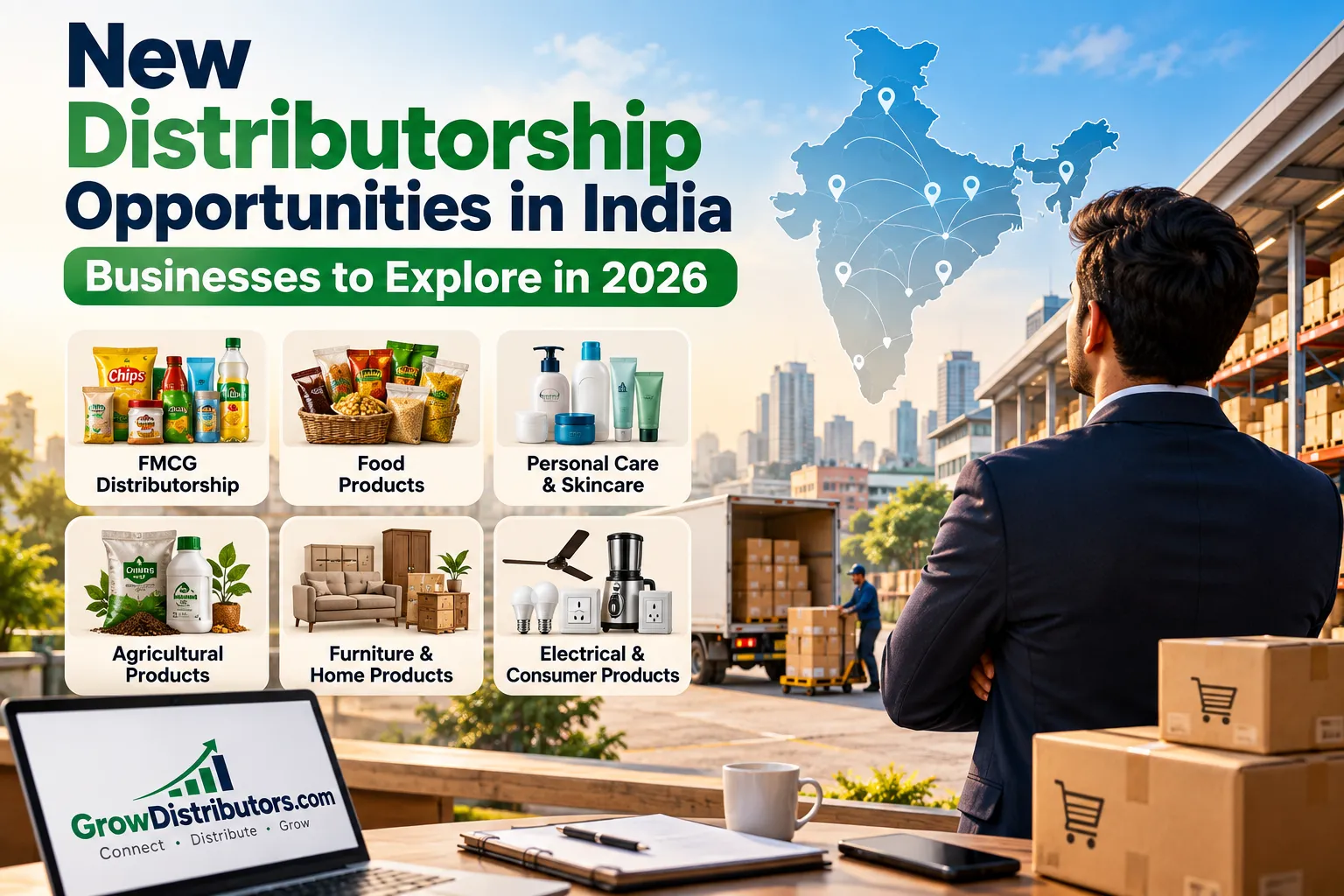
New Distributorship Opportunities in India: Businesses to Explore in 2026
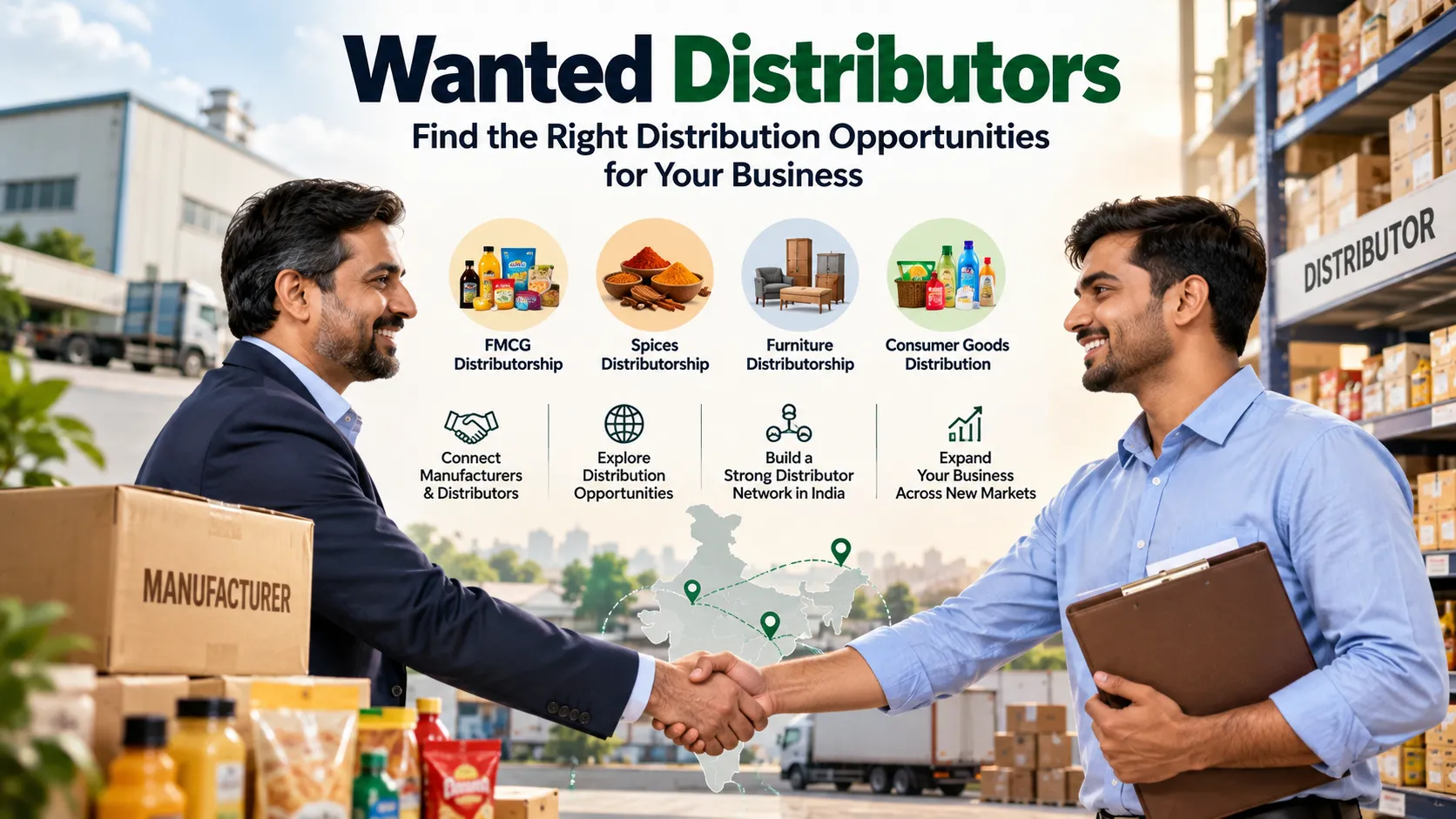
India's growing consumer market is creating new opportunities for entrepreneurs who want to start a business without building a product from scratch. From packaged foods and personal care products to agricultural inputs and household goods, manufacturers are constantly looking for reliable partners to take their products into new markets.
For many first-time entrepreneurs, FMCG distributorship is one of the business models worth exploring because FMCG products are used regularly and often have repeat demand. However, FMCG is not the only option. Depending on your investment, location, storage capacity, and local market, several other distribution businesses can also offer interesting opportunities in 2026.
Let's look at some of the major distributorship opportunities in India and what you should consider before choosing one.
Why Are Distributorship Opportunities Growing in India?
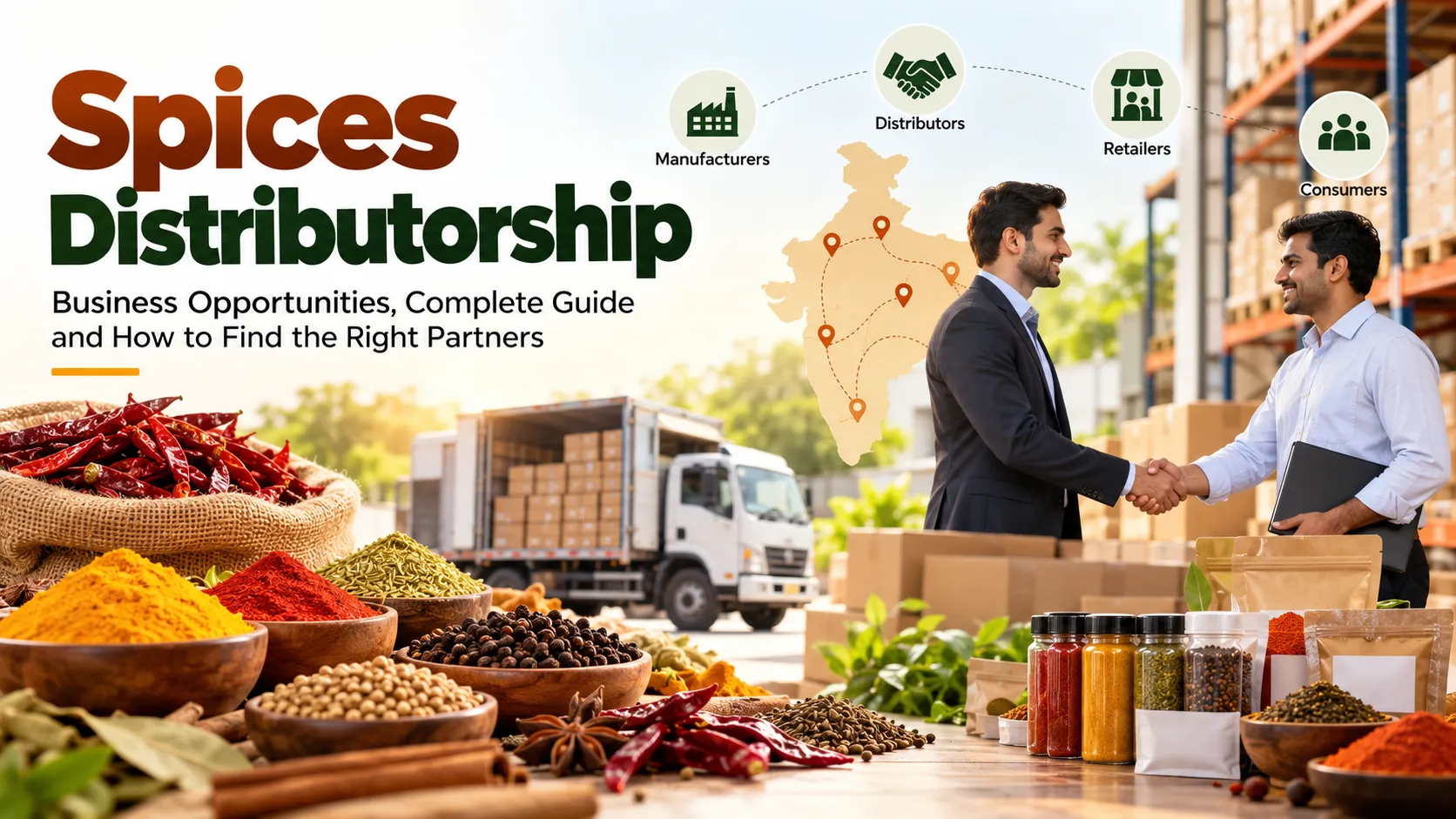
India has a large network of retailers, wholesalers, supermarkets, local shops, e-commerce sellers, and institutional buyers. Manufacturers need distribution partners who can help their products reach these customers efficiently.
This creates an important connection between manufacturers and local markets.
A distributor typically purchases products from a manufacturer or brand and supplies them to retailers, wholesalers, dealers, or other businesses. The exact investment, margins, territory, and responsibilities vary from company to company.
The growth of smaller cities and Tier 2 and Tier 3 markets is also creating opportunities for people who understand their local customers. You don't always need to operate in a metro city to build a distribution business.
1. FMCG Distributorship
FMCG distributorship continues to attract entrepreneurs because FMCG products are part of everyday life. Food items, beverages, personal care products, cleaning products, packaged goods, and household essentials are purchased regularly.
An FMCG business can be particularly interesting in areas where there is a large network of kirana stores, supermarkets, wholesalers, and local retailers.
However, don't choose an FMCG brand simply because the product looks popular. Check its existing distribution network, product demand, margins, minimum order quantity, credit policy, marketing support, and territory availability.
The right product-market fit matters more than the brand name alone.
2. Food Products Distribution
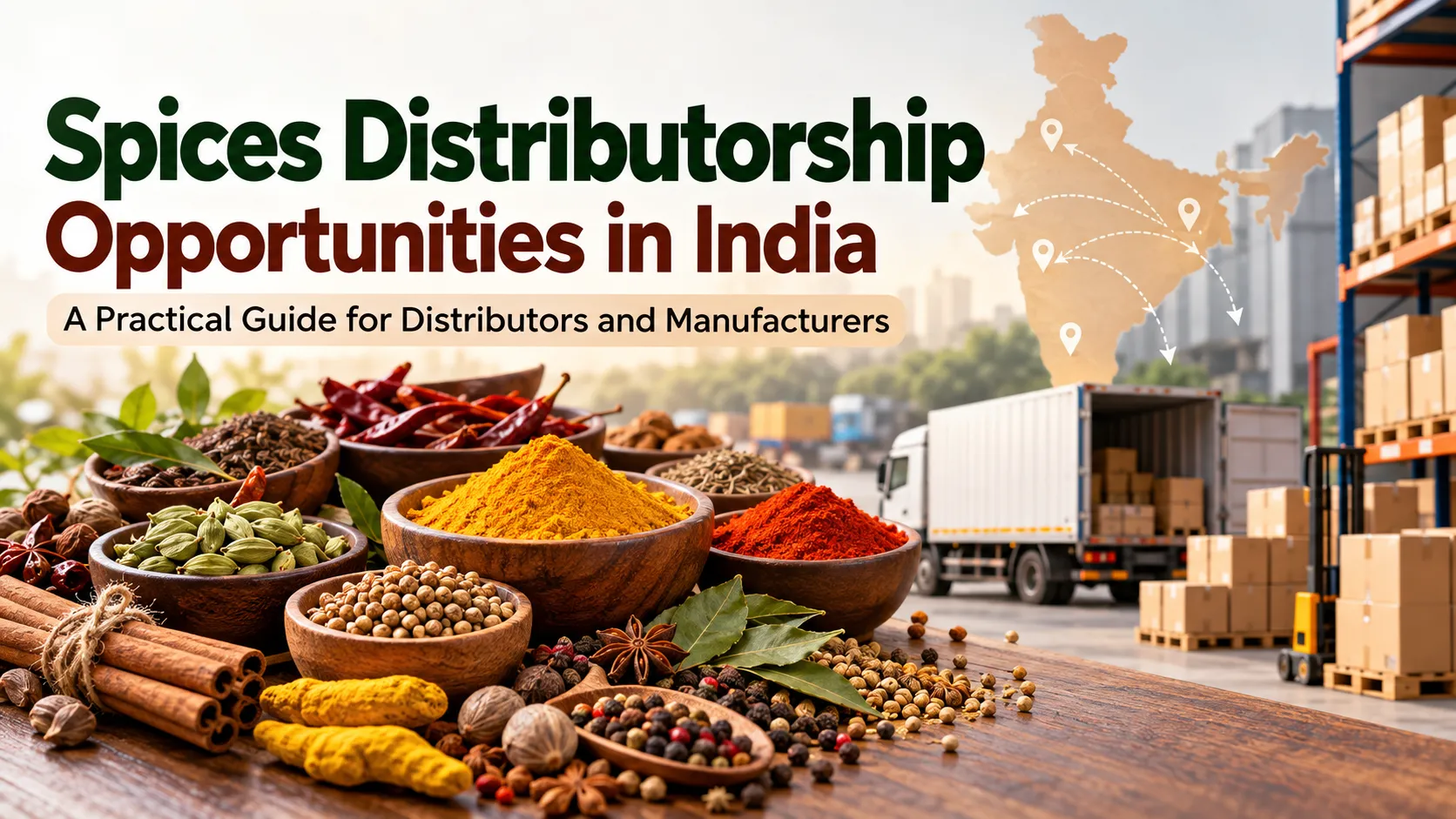
Food products represent another major category for distributors. Packaged snacks, spices, dry fruits, ready-to-eat products, beverages, sauces, and other grocery products can be distributed through local retail networks.
For someone entering an FMCG business, food distribution can be an option worth researching because retailers frequently need products that have consistent consumer demand.
Before investing, understand the product's shelf life, storage requirements, packaging, pricing, retailer margin, and competition in your area.
3. Personal Care and Skincare Products
Consumers are spending more attention on personal grooming, skincare, haircare, and hygiene products. This has created opportunities for distributors working with emerging brands as well as established manufacturers.
Products such as face washes, shampoos, soaps, creams, sunscreens, hair oils, and other personal-care products can be distributed through cosmetic stores, pharmacies, supermarkets, salons, and online sellers.
The key is to identify brands that have a clear target customer and a realistic route to market.
4. Agricultural Products Distribution
Agriculture remains an important part of India's economy, particularly in rural and semi-urban markets. This makes agricultural inputs another category worth exploring.
Depending on regulations and the manufacturer's product portfolio, opportunities may exist around fertilizers, micronutrients, bio-products, seeds, crop-care products, irrigation-related products, and other agricultural inputs.
If you already have relationships with retailers, dealers, or farmers in your region, agricultural distribution may be worth investigating.
5. Furniture and Home Products
Distribution isn't limited to small packaged products. Furniture, plastic products, home furnishings, kitchen products, and household goods can also be distributed through dealer and retailer networks.
Furniture distribution may require more storage space and higher working capital than some FMCG categories, but larger ticket sizes can make the business model different from traditional consumer-goods distribution.
Entrepreneurs should carefully calculate transportation, warehouse costs, inventory turnover, and dealer margins before entering this category.
6. Electrical and Consumer Products
Electrical accessories, lighting products, small appliances, home utility products, and other consumer goods also have established dealer and retailer networks.
For these categories, product quality and after-sales support can be extremely important. A distributor isn't simply moving boxes from one location to another. Retailers need products they can confidently sell to their customers.
That means selecting a manufacturer with reliable supply, consistent quality, and proper business support can make a significant difference.
How to Choose the Right Distributorship Opportunity
There is no single distribution business that is perfect for everyone.
Before taking a distributorship, ask yourself a few practical questions:
- How much capital can I comfortably invest?
- Is there demand for this product in my city?
- How many competing brands are already available?
- What is the minimum order quantity?
- What margins are available to distributors and retailers?
- Does the company provide marketing support?
- What territory will I receive?
- How quickly does inventory normally move?
- What are the payment and credit terms?
- Do I have adequate storage and transportation facilities?
These questions can help you avoid choosing a business purely because someone promised high profits.
Find New Distribution Opportunities Through GrowDistributors
Finding suitable manufacturers can be difficult when you have to search company websites, social media pages, directories, and individual contacts separately.
This is where platforms such as GrowDistributors.com can be useful.
GrowDistributors connects businesses, manufacturers, brands, and people looking for distribution opportunities. Instead of relying entirely on random online searches, entrepreneurs can explore different categories and identify businesses that are looking to expand their distribution network.
Whether you're interested in an FMCG distributorship, food products, furniture, agriculture, personal care, or another category, the important step is to research the opportunity before making a financial commitment.
For manufacturers, a distribution platform can also provide a way to reach potential distributors in different cities and markets.
Final Thoughts
The Indian distribution market offers opportunities across multiple industries in 2026. FMCG distributorship is one option, but entrepreneurs can also explore food products, personal care, agriculture, furniture, electrical products, and other consumer categories.
The smartest approach is not to chase every new opportunity you see. Start with your budget, location, existing network, storage capacity, and knowledge of the local market. Then compare companies based on actual business terms.
If you're actively searching for manufacturers and new distributorship opportunities in India, exploring platforms such as GrowDistributors.com can help you discover potential opportunities and connect with businesses looking to expand.
Frequently Asked Questions
1. Is FMCG distributorship a good business opportunity in 2026?
FMCG distributorship can be an option for entrepreneurs who have access to retailers, wholesalers, and local markets. The potential depends on product demand, competition, margins, inventory turnover, and the terms offered by the manufacturer.
2. What is an FMCG business?
An FMCG business deals with fast-moving consumer goods that are generally purchased frequently. Examples include packaged foods, beverages, personal care products, cleaning products, and household essentials.
3. How can I find new distributorship opportunities in India?
You can search manufacturer websites, business directories, industry networks, trade exhibitions, and specialized distribution platforms such as GrowDistributors.com to discover companies looking for distributors.
4. How much investment is required for FMCG distributorship?
There is no fixed amount. Investment can vary significantly depending on the brand, product category, territory, minimum order quantity, warehouse requirements, transportation, and working capital requirements.
5. Can I start an FMCG business in a Tier 2 or Tier 3 city?
Yes. FMCG products are sold across urban, semi-urban, and rural markets. In fact, entrepreneurs with strong knowledge of their local retail network may be able to identify distribution opportunities that larger companies cannot easily manage directly.
6. Where can manufacturers find distributors in India?
Manufacturers can use business networks, industry events, direct outreach, and platforms such as GrowDistributors.com to connect with potential distributors and expand their distribution network.
7. What should I check before taking a distributorship?
Check the company's product demand, pricing, distributor margin, minimum order quantity, territory, competition, payment terms, marketing support, return policy, and existing distribution network before making a commitment.
8. Which distribution business should I choose in 2026?
The right category depends on your investment capacity, local demand, business network, storage facilities, and experience. Rather than choosing solely on expected margins, compare the complete business model and market conditions in your target area.