Namkeen Distributorship: Profitable Distribution Opportunities in India’s FMCG Market
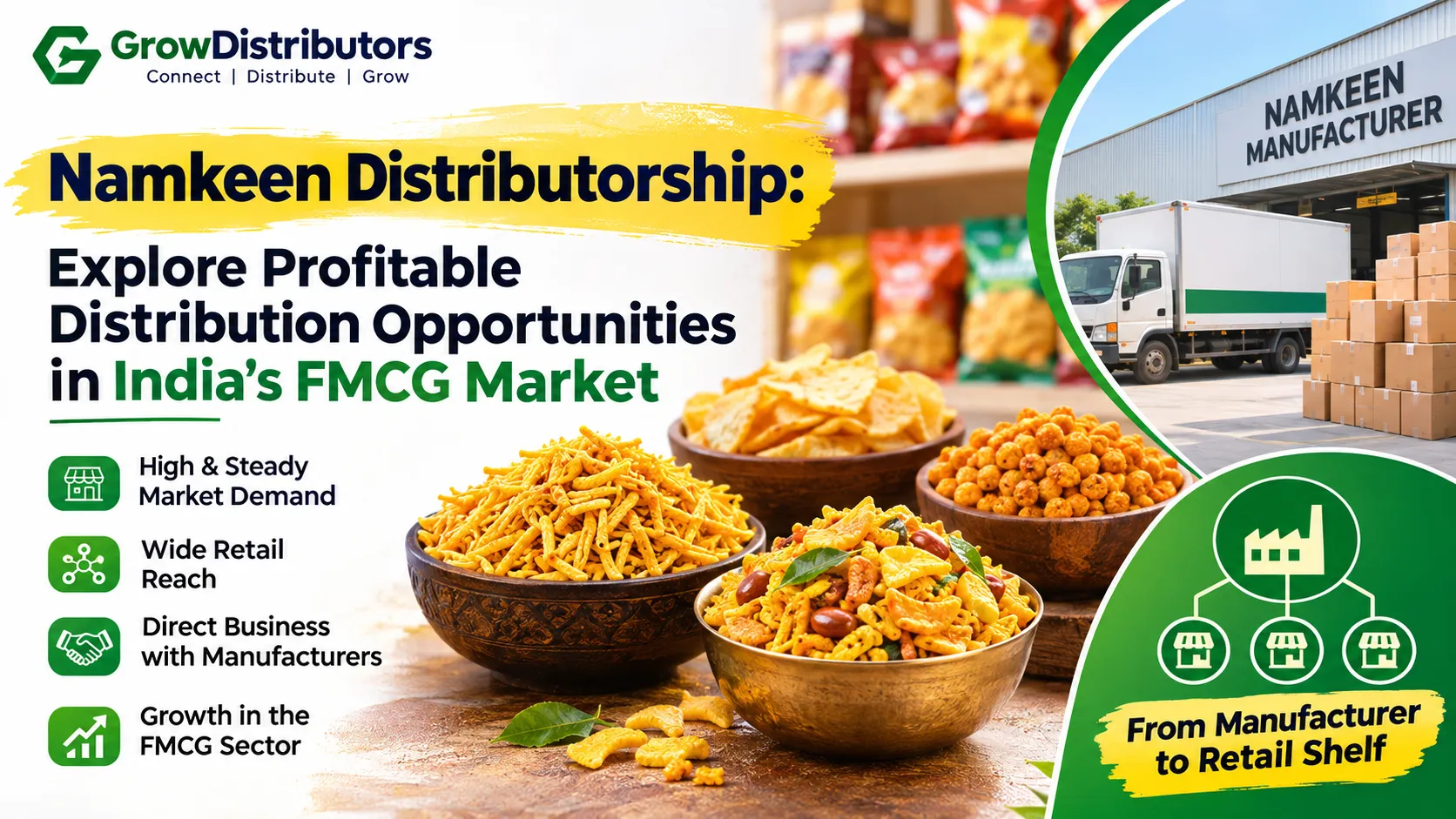
Namkeen Distributorship: Explore Profitable Distribution Opportunities in India’s FMCG Market
Namkeen is eaten in almost every Indian home, tea stall, and neighborhood shop. It is a daily-use snack, not an occasional treat. That steady demand is why namkeen distributorship has become a serious business option for people who want to enter the FMCG sector without making products themselves.
Namkeen distributorship means buying namkeen in bulk from a manufacturer or brand and supplying it to retailers, wholesalers, and sub-sellers in an assigned area. The distributor handles stock, delivery, payments, and retailer relationships. The manufacturer handles production, quality, and branding.
This guide explains how the namkeen distribution business works, how to find reliable manufacturers, how to spot fake offers, and how manufacturers can find the right distributors. It is written for aspiring distributors and for namkeen brands that want wider reach.
What Is Namkeen Distributorship?
Namkeen distributorship is a business arrangement where a distributor gets the right to sell Namkeen brand’s products in a defined territory. The distributor buys stock from the manufacturer and supplies it to retail outlets and wholesalers in that area.
A namkeen distributor is the link between a factory and the shelf. The factory cannot visit every shop, and the shopkeeper cannot buy directly from every factory. The distributor fills that gap.
Namkeen distributorship usually falls into these types:
- Exclusive distributorship: You are the only distributor for the brand in your territory.
- Non-exclusive distributorship: The brand appoints more than one distributor in the same area.
- Sub-distributorship: You supply smaller towns or pockets under a main distributor.
- Wholesale distribution: You focus on bulk supply to other wholesalers and large stores.
Why Do Namkeen Products Have Strong Demand in India’s FMCG Market?
Namkeen sells consistently because it is cheap, familiar, and bought repeatedly. It sits in the FMCG category, which covers fast-moving products that people buy often and finish quickly.
Here is why the demand holds up:
- Daily consumption: People eat namkeen with tea, during travel, at festivals, and as a quick snack.
- Wide customer base: Children, working adults, and older people all buy it.
- Regional variety: Every region has its own flavors and styles, so there is room for both national and local brands.
- Low-price entry points: Small packs make it easy for any buyer to try a product.
- Growth of packaged snacks: More buyers now prefer branded and packaged snacks over loose, unbranded ones.
- Strong retail spread: Namkeen sells through kirana stores, sweet shops, supermarkets, and online channels.
That does not mean every namkeen business succeeds. Demand for the category is strong, but demand for a specific brand in your territory is something you must verify. Many people confuse the two, and it is a common reason distributors lose money.
How Does the Namkeen Distribution Business Work?
The namkeen distribution business works as a chain: manufacturer, distributor, wholesaler or retailer, and finally the customer. Each link earns a margin, and the distributor earns by selling stock at a slightly higher rate than the purchase rate.
What Does a Namkeen Distributor Actually Do?
A distributor does much more than move boxes. The daily work includes:
- Buying stock from the manufacturer and storing it safely
- Managing freshness and stock rotation, which matters a lot for snacks
- Supplying retailers and wholesalers on a regular route
- Collecting payments and managing credit given to shops
- Reporting market feedback to the brand
- Pushing new products and promotions to retailers
How Does a Distributor Earn From Namkeen?
Profit comes from the gap between the purchase rate and the selling rate, along with any schemes or incentives the brand offers. Actual earnings depend on factors like
- The margin structure the manufacturer offers
- Your sales volume and how reliably it repeats
- Transport and storage costs
- Staff and delivery vehicle expenses
- Damaged or expired stock losses
- Credit given to retailers and how quickly it is recovered
Be careful with anyone who promises fixed or guaranteed returns. No honest manufacturer can guarantee profit, because it depends on how well you run your territory.
What Types of Namkeen Products Can You Distribute?
Distributors can handle a wide range of namkeen and related snack products, depending on the brand’s portfolio. Many brands also sell sweets, papad, or ready-to-eat items alongside namkeen.
Common product groups include:
- Traditional mixtures: Mixed namkeen, chivda, and regional blends
- Sev and bhujia varieties: Fine, thick, and flavoured types
- Fried legumes and nuts: Peanuts, moong dal, and chana-based snacks
- Flavoured and masala snacks: Spicy, tangy, and fusion flavors
- Healthier options: Roasted and baked namkeen
- Festive and gift packs: Seasonal assortments
- Bulk and loose packs: Mainly for sweet shops and wholesalers
Ask the manufacturer about shelf life, packaging quality, and which products sell best in your region. A brand with a smaller range but fast-moving products can be better than a brand with a long catalogue that sits on shelves.
Why Do FMCG Manufacturers Need Distributors?
FMCG manufacturers need distributors because they cannot reach thousands of small retailers on their own. Setting up a direct sales team in every city is expensive and slow, so brands depend on local distributors who already know the market.
A good distributor gives the manufacturer:
- Local market knowledge and trade relationships
- Storage and delivery capacity in the territory
- Faster stock movement to retail outlets
- Payment collection support
- Feedback on pricing, competition, and customer taste
This is why you will often see notices such as “distributors wanted” or “distributors required” from namkeen and snack brands. Growing brands constantly need new partners to enter new territories.
How to Find Reliable Namkeen Manufacturers
The safest way to find reliable namkeen manufacturers is to combine online research with direct verification. Do not rely on a single advertisement or a single phone call.
Practical places to look:
- Online distributor portals: Platforms that list brands looking for distributors
- Trade exhibitions and food fairs: Good for meeting manufacturers in person
- Wholesale markets: Ask existing namkeen wholesale distributors which brands move fastest
- Retailer feedback: Shopkeepers know which brands customers ask for
- Industry associations: Food and snack industry bodies often have member lists
- The brand’s own website and social media: Check whether they look active and genuine
Once you have a shortlist, verify these basics:
- Business registration and tax details
- Food safety licence, as required for food manufacturing in India
- Factory or production unit details
- Existing distributors you can speak to directly
- Product samples you can test yourself
How to Become a Namkeen Distributor
To become a namkeen distributor, you need a clear territory, a suitable brand, basic legal registrations, storage space, and a plan to reach retailers. The steps below follow a practical order.
- Study your market. Check which namkeen brands already sell well in your area and which gaps exist.
- Decide your scale. Choose whether you want to supply retailers, wholesalers, or both.
- Arrange the basics. You will need business registration, tax registration, a bank account, and storage space. Check current legal requirements with a professional.
- Shortlist manufacturers. Use the sources above and compare at least a few brands before deciding.
- Verify the manufacturer. Speak to current distributors and test samples.
- Discuss terms in detail. Cover margins, credit period, territory rights, return policy for damaged stock, and support from the brand.
- Get the agreement in writing. Read every clause about exclusivity, targets, and termination.
- Build your delivery system. Arrange vehicles, staff, and routes.
- Start with a manageable territory. Expand once your retail network is stable.
You do not need years of FMCG experience to begin. You do need discipline with cash flow, stock rotation, and retailer follow-up.
What Should You Check Before Choosing a Namkeen Brand?
Choose a namkeen brand based on product quality, margin fairness, territory protection, and genuine support, not just the brand name. A famous name with weak distributor support can hurt you more than a smaller brand with good support.
Check these factors:
- Product quality and taste consistency: Customers stop buying quickly if quality varies.
- Shelf life and packaging: Weak packaging leads to soft, stale stock and returns.
- Margin structure: Compare what you earn against your real costs.
- Territory rights: Make sure the brand will not appoint many competing distributors beside you.
- Marketing and trade support: Ask about promotions, displays, and sampling.
- Credit and payment terms: Know exactly what you owe and when.
- Return and damage policy: This protects you from avoidable losses.
- Supply reliability: Late or short deliveries damage your retailer relationships.
- Brand reputation in the trade: Ask retailers and other distributors.
How to Identify Genuine Namkeen Distributorship Opportunities
A genuine namkeen distributorship opportunity is transparent about terms, allows verification, and does not pressure you to pay money quickly. Fake and misleading offers exist across the FMCG space, so caution is part of the job.
Warning signs:
- Large upfront payments demanded before any documents or agreement
- Guaranteed profit or fixed income promises
- No clear company address, factory details, or registration
- Refusal to let you speak with existing distributors
- Pressure to decide fast, often with phrases like “limited territory left”
- Vague or missing written agreement
- Payments requested to personal accounts instead of business accounts
Signs of a genuine offer:
- Clear written terms and a proper agreement
- Verifiable business and licence details
- Willingness to share references from current distributors
- Sample products available for testing
- Honest discussion of challenges, not just benefits
- A real support plan for marketing and supply
If something feels too easy, treat that as a reason to investigate more, not to hurry.
What Are the Common Distribution Challenges and How Can You Overcome Them?
The biggest challenges in namkeen distribution are stock freshness, retailer payments, competition, and logistics. Each can be managed with planning.
| Challenge | Why It Happens | How to Handle It |
|---|---|---|
| Stale or damaged stock | Namkeen is sensitive to moisture and rough handling | Use dry storage, rotate stock regularly, and agree a clear damage policy with the brand |
| Delayed retailer payments | Small shops often ask for credit | Set credit limits, track dues, and avoid over-supplying one shop |
| Strong competition | Many local and national brands compete | Focus on service quality, regular visits, and retailer trust |
| Cash flow pressure | Money is tied up in stock and unpaid bills | Keep a cash reserve and match purchase size to real demand |
| Delivery and fuel costs | Wide or scattered territories | Plan efficient routes and group deliveries |
| Seasonal demand swings | Festivals boost sales, other periods slow down | Plan stock ahead of peak periods |
| Weak brand support | Some manufacturers disappear after appointing distributors | Confirm support terms in writing before signing |
How Can Manufacturers Find Distributors for Their Namkeen Products?
Manufacturers can find distributors by combining trade networks, direct outreach, and online distributor platforms. Posting “wanted distributors” notices is common, but the quality of the response matters more than the quantity.
Practical approaches:
- List on an online distributor portal: This lets interested buyers find you instead of you chasing them.
- Use existing trade relationships: Retailers and wholesalers can recommend serious local distributors.
- Attend food and FMCG trade events: Face-to-face meetings build trust.
- Be clear about your distributor requirements: State territory, storage needs, and expected commitment.
- Offer proper product information: Include product range, packaging, and support details.
- Screen applicants carefully: Check their financial stability, existing network, and experience with similar products.
Manufacturers who want to find distributors for FMCG products should remember that the right distributor is not always the biggest one. A smaller distributor who focuses on your product can outperform a large one who treats it as an afterthought.
How Do Online Distributor Platforms Help Manufacturers and Distributors Connect?
An online distributor portal gives manufacturers and distributors a shared place to discover each other, share product details, and start business conversations. It reduces the time and cost of searching through scattered contacts.
For distributors, such platforms help you:
- Find distributors’ opportunities across many product categories in one place
- Compare brands before making contact
- Discover namkeen, spice, snack, and other food product options
- Reach manufacturers directly
For manufacturers, they help you:
- Showcase products to interested distributors
- Reach new territories without building a large sales team
- Find distributors online who match your needs
- Build a wider manufacturer and distributor network
A platform is only a starting point. You still need to verify terms, check samples, and negotiate carefully.
Why Is GrowDistributors a Useful Platform for Finding Distribution Opportunities?
GrowDistributors is a business-to-business distributor discovery and networking platform. It connects manufacturers, brands, distributors, wholesalers, and business owners in one place.
Here is how it fits into the process:
- For manufacturers and brands: You can showcase your products and reach potential distributors who are actively searching for opportunities.
- For aspiring distributors: You can explore distributorship options across FMCG, food products, namkeen, spices, and other categories.
- For wholesalers and business owners: You can discover new product lines and expand your supply network.
As a growing distributor network built around the manufacturer-distributor relationship, GrowDistributors aims to make the search for partners simpler and more organised. It works as a distributor network for manufacturers who want wider market reach and for buyers who want direct access to brands.
If you are already searching for a namkeen distributorship, start by reading the detailed Namkeen Distributorship page to see current opportunities and categories.
Whichever platform you use, do your own due diligence. A listing is an introduction, not a guarantee.
What Related Distribution Opportunities Can You Explore Besides Namkeen?
If namkeen suits you, related food and FMCG categories can widen your product range and use the same retail network. Retailers who buy namkeen often buy other snacks and kitchen products too.
Worth exploring:
- Snacks distributorship: Chips, biscuits, and ready-to-eat items
- Food products distributorship: Staples, packaged foods, and beverages
- Spice distributorship and masala distributorship: Whole spices, blended masalas, and cooking essentials
- Wider FMCG business opportunities: Personal care, home care, and other daily-use categories
You can read more under Spice Distributorship and FMCG Distributorship Opportunities
Namkeen Distributorship vs Spice Distributorship
| Factor | Namkeen Distributorship | Spice Distributorship |
|---|---|---|
| Product type | Ready-to-eat snacks | Cooking ingredients |
| Buying pattern | Frequent, impulse and daily snacking | Regular, planned household purchase |
| Shelf life concern | Higher risk of staleness and moisture damage | Generally steadier, but quality and aroma matter |
| Main buyers | Kirana stores, sweet shops, tea stalls | Kirana stores, supermarkets, grocery wholesalers |
| Seasonal effect | Strong boost during festivals | Strong boost during wedding and festival periods |
| Storage needs | Dry, airtight, careful handling | Dry, clean, away from strong odours |
Many distributors begin with one category and add the other later once their retail network is stable.
Frequently Asked Questions
What is namkeen distributorship?
Namkeen distributorship is a business model where a distributor buys namkeen from a manufacturer and supplies it to retailers and wholesalers in an assigned territory. The distributor manages storage, delivery, and payments, while the manufacturer handles production and branding.
How can I become a namkeen distributor?
Study your local market, shortlist namkeen manufacturers, verify their credentials, and discuss margins, territory, and payment terms. Complete the needed registrations, arrange storage and delivery, and sign a written agreement before placing orders. Start with a manageable territory and expand gradually.
How do I find namkeen manufacturers for distributorship?
Use online distributor portals, trade exhibitions, wholesale markets, and industry associations. Ask existing distributors and retailers which brands perform well. Always verify licences, request samples, and speak with current distributors before committing.
Is namkeen distributorship a good FMCG business opportunity?
It can be, because namkeen is a high-demand, fast-moving product with repeat purchases. But success depends on the brand’s quality, margins, territory protection, and your ability to manage stock and collections. No distributorship is risk-free.
What should I check before taking a namkeen distributorship?
Check product quality, shelf life, packaging, margin structure, territory rights, credit terms, return policy, and the manufacturer’s reputation. Confirm the brand’s registrations and speak with existing distributors. Get everything in writing.
How can manufacturers find distributors for namkeen products?
Manufacturers can list their products on an online distributor platform, use trade networks, attend food and FMCG events, and ask retailers for recommendations. Clear requirements and careful screening of applicants lead to better partnerships.
Where can I find genuine FMCG distributorship opportunities?
You can find them through online distributor portals, trade fairs, direct manufacturer contact, and industry networks. A genuine opportunity shares clear terms, allows verification, and does not demand hurried payments.
What is a distributor portal?
A distributor portal is an online platform where manufacturers list products and distributors search for business opportunities. It helps both sides connect directly and compare options without relying only on personal contacts.
How can GrowDistributors help manufacturers and distributors?
GrowDistributors is a business-to-business platform that connects manufacturers, brands, distributors, wholesalers, and business owners. Manufacturers can showcase products to potential partners, and aspiring distributors can explore opportunities in FMCG, namkeen, spices, and other food categories.
What is the difference between namkeen and spice distributorship?
Namkeen is a ready-to-eat snack with higher freshness and moisture concerns. Spice and masala products are cooking ingredients bought for household use. Both sell through similar retail channels, but their storage needs, buying patterns, and product handling differ.
Do I need experience to start a namkeen distribution business?
Prior FMCG experience helps but is not strictly required. You do need basic business discipline, local market knowledge, and the ability to manage stock, credit, and retailer relationships.
Can I take more than one FMCG distributorship together?
Yes, many distributors handle several products. Make sure the brands do not directly compete with each other and that your storage, staff, and cash flow can handle the extra load.
Conclusion
Namkeen distributorship offers a practical way into the FMCG sector because the product is familiar, widely consumed, and sold through almost every kind of retail outlet. But demand alone does not make a good business. The right manufacturer, fair terms, careful stock handling, and steady retailer relationships decide whether a distributorship succeeds.
If you are an aspiring distributor, verify before you invest, and treat every offer with healthy doubt. If you are a manufacturer, look for distributors who match your product and territory, not just those who respond fastest.
Ready to explore? Visit GrowDistributors to discover distributorship opportunities, connect with manufacturers, or list your products for potential distributors.